

Categories
Blog

MORE TREES, LESS CEMENT

was one of our most popular stickers at our Earth Fest display on April 16.  A photo of our table of trifold presentations, buttons, stickers, postcards and videos was featured prominently in the story “Earth Fest returns to Oxford” by Bob Ratterman in the April 24 issue of the Oxford Press—thank you Bob!  In that story, OCPJ’s Board President Barbara Ann Caruso was quoted as saying, “Environmental issues are interconnected with justice.”  Barb pointed out that challenges to environmental integrity adversely affect disadvantaged people and people of color.  New EPA guidelines recognize this, and use maps showing heat islands where inequities in access to healthy environments are highlighted.  US 27 north (College Corner Pike) in Oxford appears on every social vulnerability map—that’s where people of color and those who earn low incomes live.  The City of Oxford will be planting 52 trees, purchased with a Tree Canopy Restoration Grant from the state of Ohio, in areas with a high Social Vulnerability Index (.5065 in the northwest quadrant of the City, along College Corner Pike, in comparison to .2962 in the rest of the City).  Noted in our display, “Oxford has an established history of concern, care and maintenance of the urban forest, as evidenced by the community qualifying for the National Arbor Foundation’s Tree City USA status for 25 consecutive years.”
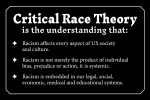
The situation in Oxford is not entirely positive.  A popular postcard in our Earth Fest display emphasized the importance that OCPJ puts on systemic dynamics in understanding which members of our community are most challenged by the severe shortage of affordable housing in Oxford.  Stressors related to existing in poverty, and associated mental health and addiction challenges, become clear when intersectional analyses of access to resources in the community, promoted by frameworks like Critical Race Theory, are adopted.  At the second public input session for the “Oxford Tomorrow” comprehensive plan, held on April 18, there was no mention of the need to address the particular situations of people who live close to the Earth, camping out in honeysuckle thickets or along the railroad tracks in the Miami Mobile Home Park.  Housing is a basic human right, and there is no justice as long as a significant percentage of the members of our community can only afford to park their bedroom (car) in a mother-in-law’s driveway, and use her bathroom and kitchen to meet basic subsistence needs.  In February of 2021, friends of OCPJ contributed $14,000 to the Family Resource Center to help keep their cold shelter in operation for an additional month.  On May 1, 2022, members of the OCPJ Board will participate in a public conversation, “Housing on a continuum”, which is being hosted by the Eradicating Systemic Poverty Committee of the Oxford Presbyterian Church—we will be promoting formation of an Oxford Homeless Network that works in coalition to support the good work that is being done currently, and to fill in the gaps where resources do not exist.

OCPJ is able to be a voice in the Community for peace and justice because of the financial support, and dedication of time and energy, by active members.  We sent out a call for new members and renewals in early January of this year—we have yet to hear back from many of you.  Please return your membership form and check to the Center for Peace and Justice, 16 S. Campus Ave, Oxford, OH.  45056, or go to our website, ocpjohio.org, where you will find the membership form and instructions about how to donate to support our work.  The PayPal option is available.  We need you to help determine the areas related to justice that OCPJ will pursue.  And you need OCPJ to be that vocal voice for Peace and Justice in the community.  Feel free to contact us at facilitator@ocpjohio.org to let us know about the injustices you see and experience, and how you would like to be involved.

Categories
Blog

“Oxford Tomorrow: Environmental Justice”

The City of Oxford is in the process of developing a new comprehensive plan that will help shape future growth and change in the community for years to come. The City is calling that plan OXFORD TOMORROW. According to the website for the plan, “Oxford is already a unique and exciting place to be. We welcome all residents to participate in the planning process and contribute ideas on how to make Oxford even better. “

One way to make Oxford even better is to recognize that principles of environmental justice demand that we lessen disparities in access to healthy environments, like green spaces. In a May 17-24, 2021 article in The Nation , writer Amal Ahmed suggests that “Today the phrase ‘environmental justice’ is common parlance among environmentalists and climate activists, who understand that poor communities and communities of color across the globe will disproportionately bear the effects of climate change.” If we look at a map of the green spaces in Oxford, we see that the majority of the green spaces are located on the East side of the City, adjacent to the campus of Miami University. There are wonderful walking trails that run through these green spaces. This stands in stark contrast to the relative absence of green spaces along the College Corner Pike corridor that is the main thoroughfare in and out of Oxford in a northwest direction. Along the Pike, small businesses are interspersed with a mobile home park, a subsidized housing apartment complex, and moderately-priced rental units.

In 2022, the City of Oxford will plant about 50, two-inch in diameter trees along its streets after receiving funding from the Ohio Department of Natural Resources (DNR) Urban Canopy Restoration Grant in late November. of 2021. According to David Treleaven, Oxford’s Environmental Specialist, all 50 trees will be planted along roads in the northwest portion of the city, specifically College Corner Pike, Northridge Drive, Brown Road, and Fieldcrest Avenue, where the Social Vulnerability score is considered high. According to the Centers for Disease Control and Prevention, Social Vulnerability measurement was developed as a means to allocate resources to different communities. Several factors, including socioeconomic status, household composition and housing conditions can affect a community’s access to clean natural resources like air and water. Treleaven adds, “This grant incorporated an environmental justice component and with that, there is a Social Vulnerability Index and that works into the economics and environment of an area.”  Oxford’s Urban Forestry Program is an example of a local initiative that is informed by principles of environmental justice. We commend the City for planning and execution of initiatives that reflect principles of justice.  

Want to learn more about principles of environmental justice? How about Heat islands–urbanized areas that experience higher temperatures than outlying areas. Structures such as buildings, roads, and other infrastructure absorb and re-emit the sun’s heat more than natural landscapes such as forests and water bodies. Urban areas, where these structures are highly concentrated and greenery is limited, become “islands” of higher temperatures relative to outlying areas. Or The Social Vulnerability Index–calculated by the Centers for Disease Control, the higher the SVI of a census area, the more social vulnerability in that area, meaning that area may need more resources to thrive.

What other disparities in access to resources exist in Oxford? One of the issues that is most clearly addressed in the initial conversations about Oxford Tomorrow is the need for more affordable housing in Oxford. For 79 of the hundreds of households served by the Family Resource Center in 2021, affordable housing meant a car, a tent, a friend’s couch or shed, or a tarp in a honeysuckle thicket. In Oxford Tomorrow, what resources will be dedicated to meeting the survival needs of the most vulnerable members of our community?

The next Public Input session for Oxford Tomorrow is on Monday, April 18 from 6:00-7:30 pm at Oxford Bible Fellowship, located at 800 S. Maple St. Make sure you visit the Oxford Tomorrow website to register to attend on Monday night. Before then, visit the Oxford Citizens for Peace and Justice table at Earth Fest. Earth Fest, celebrating Earth Day, will be held on Saturday, April 16, from 10:00 am-1:00 pm in Oxford’s Uptown Park. We will have lots more information for you, and more ideas about issues of justice that need to be addressed in Oxford’s comprehensive plan. Remember, our mission is to educate and act locally to recruit and organize a citizens’ movement with the sustained political power to construct a world of peace with social, economic, and environmental justice. Providing input to Oxford Tomorrow is an excellent way for you to be a part of this movement. Make sure you are ready to speak justice to power in making your contribution to Oxford Tomorrow. See you on Saturday in Oxford Memorial Park.